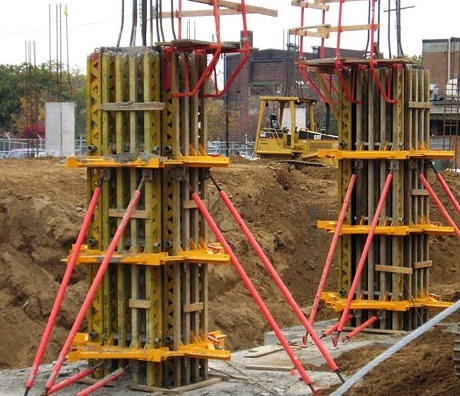
What Is Concrete Formwork?

Formwork is the moulding into which wet concrete is poured to get the user greater treatments for the precise model of the finished, cured concrete. Formwork could be designed with almost anything but is often times designed with a variety of timber, plywood, and aluminum or steel hardware. Formwork either can be dismantled following your concrete has cured to a acceptable level, or it may be left to keep embedded on the permanent basis.

The many methods and kinds of cnc service uk have their individual advantages, but unless you’re carrying this out being a business, the most common type mentioned above, is much more than sufficient. Making small components of formwork for shed or room foundations, walls, or even staircases, can be achieved with the simplest materials. Home centers sell plywood for this specific purpose using a glossy finish on one side to prevent adhesion.

The basic notion of formwork may be the advance of “walls” that will sand which concrete poured between them. The height, width, and overall design-complexity of such walls are flexible in order to meet the requirements of the given job. It could be as simple as a single foot square, 5 cm high deck-post base or a labyrinth of foundation pathways, walls, staircases, and just about anything imaginable.


A very important factor is certain, and that’s that formwork is responsible for probably the most intricate concrete structural designs around today. Having said that, generally as a DIYer, you will be working on even less complex formwork composition. It’s not necessary to make use of the plywood with all the “glossy finish”, but what you may use, understand that it’s going to mirror the finished surface of the concrete.

Short walls won’t require all that much bracing and support, but as your walls get higher, it will be vital that you don’t skimp on the support. Wet concrete behaves like all other liquid and can produce hydrostatic pressure. In other words, as with every substance inside a fluid state, you will see more pressure in the bottom with the container and will lessen with height. And that means you must concentrate more support at the end.

There are various means of attaching formwork together securely. Obviously, the thicker and taller the wall, the more support you’ll need. Businesses of hardware available for individual specific tasks – such as for columns or walls. Wedges that are hammered into staggered slots in flat bars of steel can be used for formwork with smaller perimeters, whereas long bolts threaded through sleeves cut out to fit inside the formwork are used for larger projects.

The bolts are removed after the concrete has cured, however the sleeves remain. The holes are merely grouted up. This might explain why you often see slightly off-color circular tracings dotting a concrete wall. Obviously, these kind of hardware usually are not a necessity. There is also by totally fine with only timber, it is simply a little more time-consuming not forgetting harder to acquire accurate.

Introduce Yourself (Example Post)

This is an example post, originally published as part of Blogging University. Enroll in one of our ten programs, and start your blog right.

You’re going to publish a post today. Don’t worry about how your blog looks. Don’t worry if you haven’t given it a name yet, or you’re feeling overwhelmed. Just click the “New Post” button, and tell us why you’re here.

Why do this?

  • Because it gives new readers context. What are you about? Why should they read your blog?
  • Because it will help you focus you own ideas about your blog and what you’d like to do with it.

The post can be short or long, a personal intro to your life or a bloggy mission statement, a manifesto for the future or a simple outline of your the types of things you hope to publish.

To help you get started, here are a few questions:

  • Why are you blogging publicly, rather than keeping a personal journal?
  • What topics do you think you’ll write about?
  • Who would you love to connect with via your blog?
  • If you blog successfully throughout the next year, what would you hope to have accomplished?

You’re not locked into any of this; one of the wonderful things about blogs is how they constantly evolve as we learn, grow, and interact with one another — but it’s good to know where and why you started, and articulating your goals may just give you a few other post ideas.

Can’t think how to get started? Just write the first thing that pops into your head. Anne Lamott, author of a book on writing we love, says that you need to give yourself permission to write a “crappy first draft”. Anne makes a great point — just start writing, and worry about editing it later.

When you’re ready to publish, give your post three to five tags that describe your blog’s focus — writing, photography, fiction, parenting, food, cars, movies, sports, whatever. These tags will help others who care about your topics find you in the Reader. Make sure one of the tags is “zerotohero,” so other new bloggers can find you, too.

Design a site like this with WordPress.com
Get started